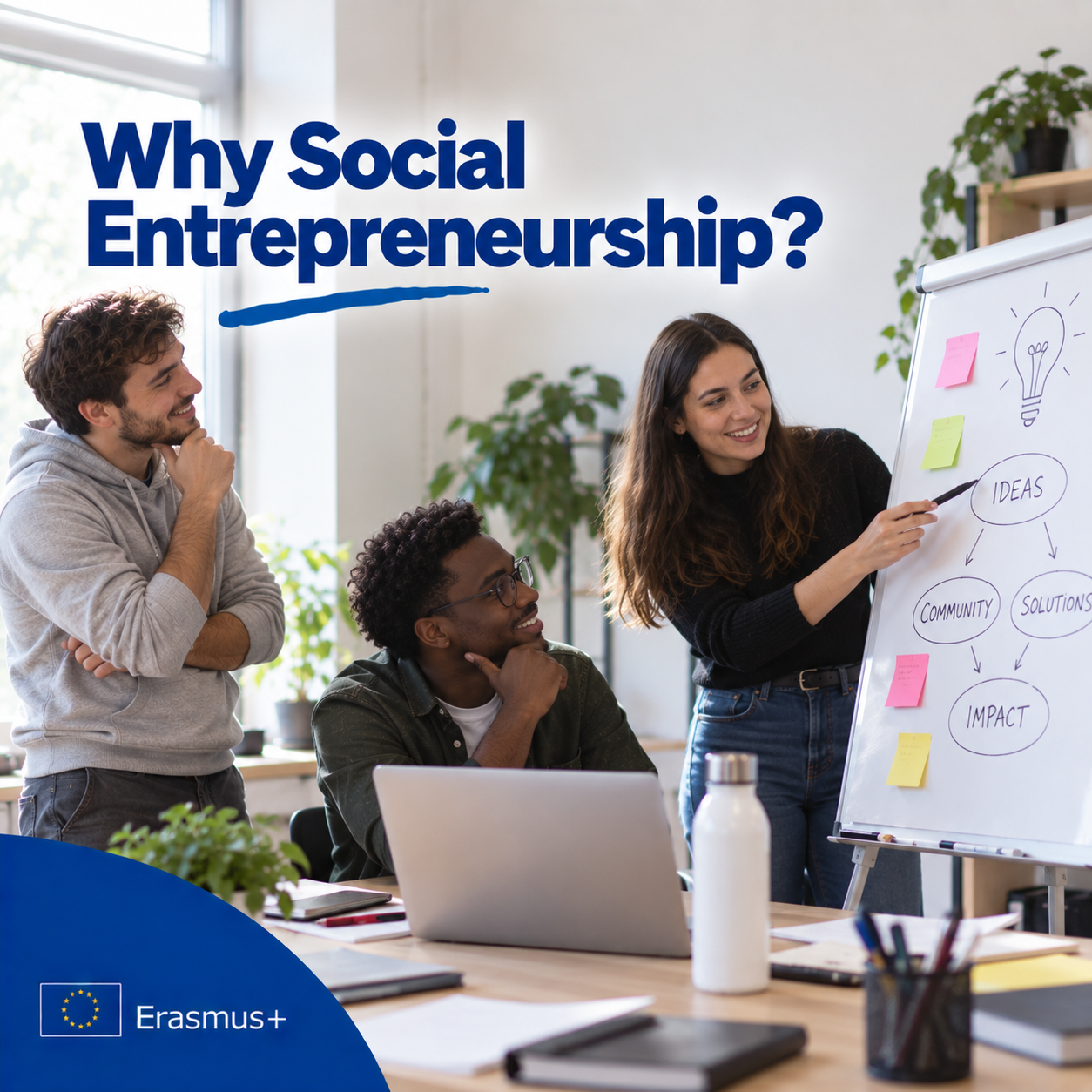
Social entrepreneurship combines the idea of running a business with the aim of addressing a social need. Instead of focusing only on financial results, social entrepreneurs also look at the difference their work can make for people and communities.
For people with disabilities, this can be an important way to explore professional opportunities, develop skills and participate more actively in the labour market.
A different way to create opportunities
Entering the labour market can be difficult when people face barriers related to accessibility, skills, education or available opportunities.
Entrepreneurship can provide another route. It allows people to develop their own ideas, identify needs in their communities and create products or services that respond to those needs.
Social entrepreneurship adds another dimension: the business idea also has a social purpose.
This can mean creating a service that responds to an unmet community need, developing products that improve everyday life, or creating opportunities for people who may face barriers to employment.
Skills are an important part of the process
Having an idea is only the beginning. Turning it into a sustainable initiative requires a range of skills.
Entrepreneurs may need to understand how to develop an idea, identify opportunities, communicate with customers, use digital tools, manage resources and promote their work.
These are also areas that AccessibleMarket focuses on. The project aims to help adults with disabilities, including deaf people, develop social entrepreneurship skills and digital capacities, while providing accessible educational resources.
The role of digital skills
Digital technology has changed the way businesses are created and managed.
Today, social entrepreneurs can use digital tools to research an idea, communicate with customers, promote their activities and collaborate with others. For people with disabilities, accessible digital technologies can also make participation in learning and professional activities easier.
For this reason, digital skills and entrepreneurship increasingly go together.
AccessibleMarket brings these two areas together by focusing on digital readiness, social entrepreneurship and accessibility. The project also explores accessible digital tools and learning resources designed around the needs of its target groups.
Creating value for people and communities
One of the strengths of social entrepreneurship is its focus on real needs.
A successful social enterprise can generate economic activity while also contributing to a community. Its impact can involve inclusion, access to services, local development, sustainability or creating opportunities for others.
For people with disabilities, developing the skills to explore these possibilities can support greater confidence and participation.
AccessibleMarket responds to this need by working with adults with disabilities, VET educators and organisations connected to training, employment and inclusion.
Why does it matter?
Social entrepreneurship is not a solution to every employment barrier. But it can create another pathway for people who want to use their skills, develop their own ideas and contribute to their communities.
It also encourages us to look at entrepreneurship in a broader way: not only as a way to create a business, but as a way to create value for people and society.
This is why social entrepreneurship is an important part of AccessibleMarket — alongside accessible learning and digital skills.
A good idea can become a business. A social idea can also create change.